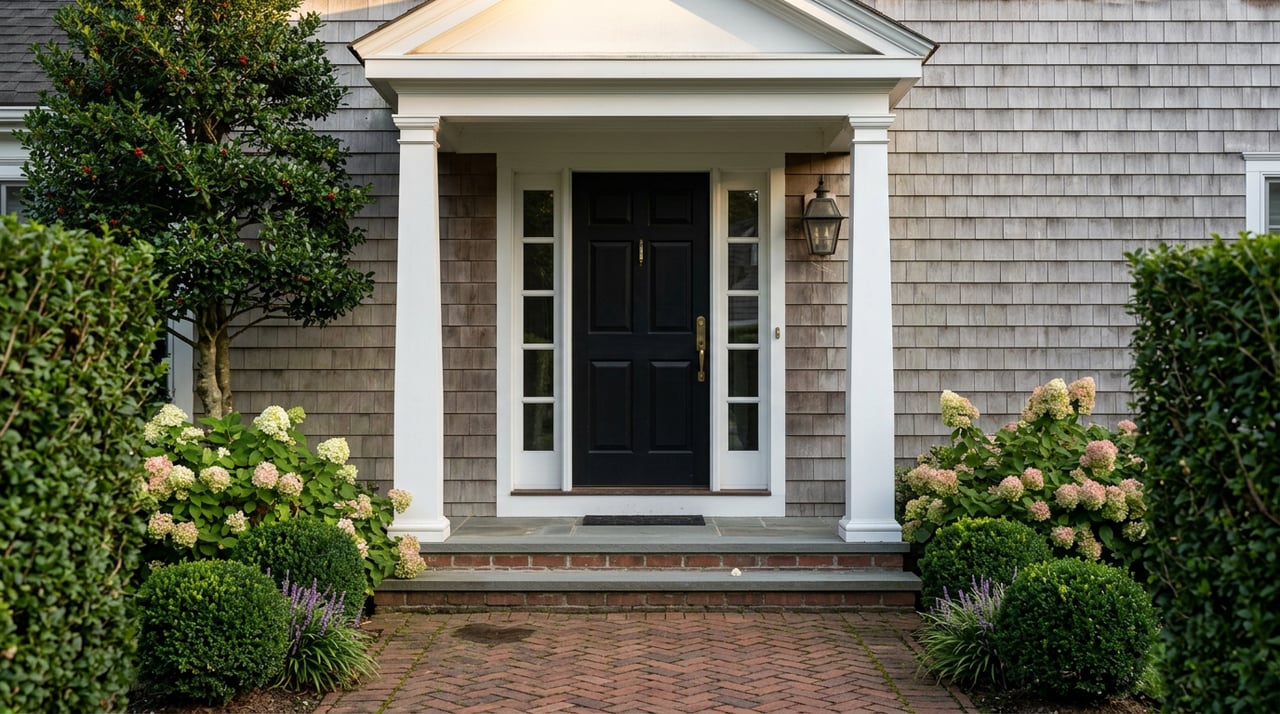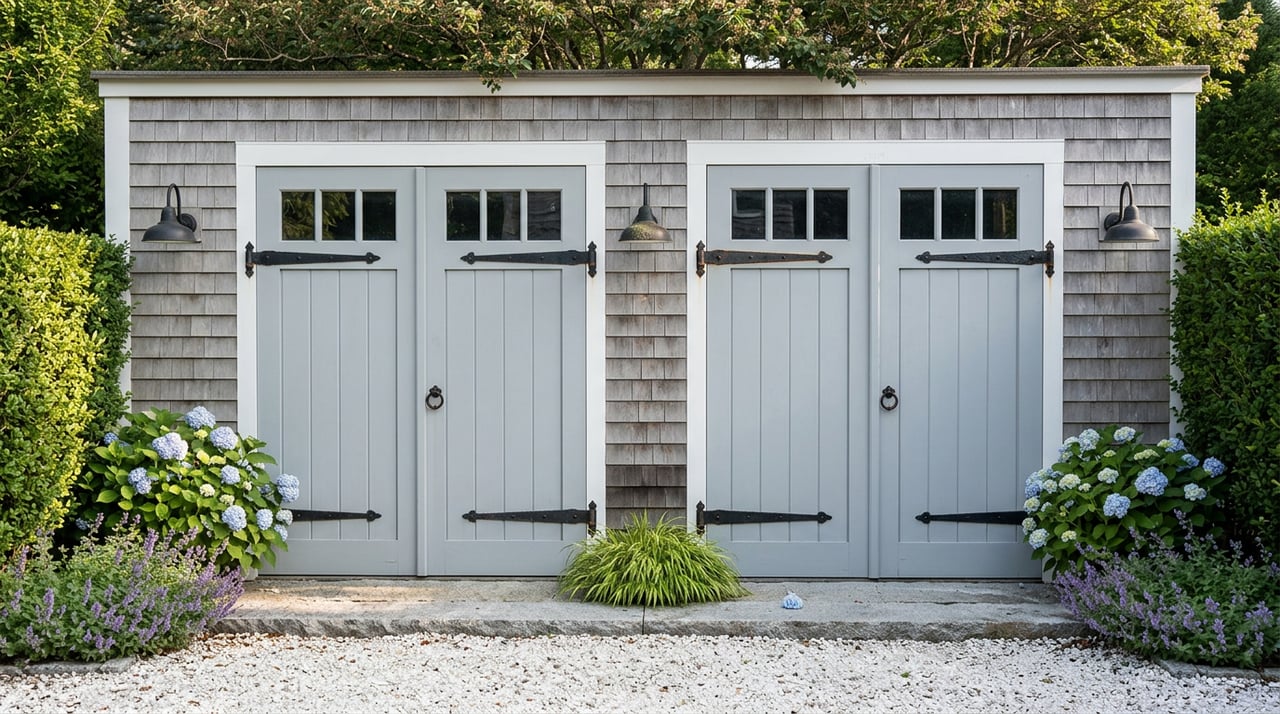
A property at 9 Pleasant Street changed hands in mid-June for $9,650,000. The town's assessed value was $7,503,200. That gap, roughly 29 percent above assessment, is the kind of number that used to feel like an outlier on Nantucket. In the summer of 2026 it is closer to the pattern.
If you have been watching the headline numbers this year, the pattern looks contradictory. First-half transactions are down. Inventory is down further. Average sale prices are up. Zillow's index for the island is off slightly year over year. The tidiest reconciliation of those figures sits inside a single measurement Realtor.com published on July 15: in the Nantucket market's $1 million to $2 million tier, the median home is 1,011 square feet. That is the smallest of any luxury market the report analyzed. It is also, once you sit with it, the thesis for the year.
The measurement that reframes every comparison
The Realtor.com June 2026 Luxury Housing Report ranks vacation-heavy markets by the share of housing stock reserved for seasonal use. Nantucket tops the list at 55.0 percent. Vineyard Haven follows at 54.4 percent. Both islands sit at roughly 17 times the 3.3 percent national baseline. The entry point to Nantucket's top 10 percent of listings, as of June, was $14,117,250, the steepest threshold on the ranking.
Anthony Smith, senior economist at Realtor.com, framed these as "scarcity of place" markets. Translation for a buyer: your dollar is not purchasing square footage here. It is purchasing a fixed quantity of shoreline, a fixed quantity of moor, and access to a rental market that regulates itself.
Here is the same idea in ratios rather than adjectives:
| Market metric (June 2026) | Nantucket | U.S. luxury baseline |
|---|---|---|
| Share of housing stock held as seasonal | 55.0% | 3.3% |
| Median listing price | $4,925,000 | $1,277,907 (90th-percentile entry) |
| Top-10% listing threshold | $14,117,250 | Varies by metro |
| Median home size in the $1M-$2M tier | 1,011 sq ft | Materially larger in every peer market |
| YoY change in luxury entry point (national) | Not comparable | -1.7% (27th straight monthly decline) |
The national luxury market has been softening for more than two years. Nantucket's pricing does not correlate to that trend, and the report is explicit about why. Where the national luxury buyer is negotiating on square footage and finish, the Nantucket buyer is negotiating on a parcel that cannot be manufactured.
Why the first half of 2026 looks weak and isn't
Fisher Real Estate's June snapshot, authored by Jennifer Shalley Allen, put first-half 2026 transactions 25 percent below the same period in 2025 and dollar volume 15 percent below. May was the only month all year that beat its 2025 comparison. Inventory is down 26 percent from a year ago.
The J. Pepper Frazier Company's own market dashboard, running January 1 through early May of this year, shows the countercurrent that resolves the paradox. Average sale price sat at $4,193,746, up 18.5 percent. Median sale price was $3,317,707, up 33 percent. Sales-to-original-ask held at 92 percent. Days on market averaged 150. Only 69 properties transacted in that window, down 37.8 percent, and total dollar volume was $289,368,500, down 26.3 percent.
Fewer sales, priced higher. That is what a supply-constrained luxury market looks like when the mix skews upmarket. Zillow's home value index, which weights the entire housing stock rather than the transaction mix, drifted down 1.1 percent over the same twelve months. The two data sets are measuring different things. Buyers reading the index and expecting to negotiate against it will find themselves negotiating against the mix instead.
The forward indicator sitting inside the Fisher report is the one worth watching. Contracts signed in May and June ran meaningfully higher than in the January through April window. That is the same period during which the last regulatory question hanging over the island got answered.
The November vote most off-island buyers missed
For roughly five years, buyers who wanted the option of short-term renting a Nantucket home carried a live legal risk. Cathy Ward's lawsuit against the town, ruled on twice by Massachusetts Land Court Judge Michael Vhay, held that Nantucket's zoning code did not permit short-term rentals as a principal use in residential districts. Judge Vhay sided with Ward both times. The second ruling in June 2025 threatened non-owner-occupied rentals in the Residential Old Historic district, which covers a large share of downtown.
That risk closed on November 4, 2025. At Special Town Meeting, Article 1 passed 1,045 to 421, a 71 percent margin that cleared the two-thirds threshold. The article expressly permits short-term rentals as an allowed use in every zoning district except a specific commercial-industrial pocket near Nantucket Memorial Airport. It resolves the zoning dispute at the center of the Ward litigation.
The compliance layer is unchanged and enforced through the town's health department. Per Chapter 338 of the town regulations, every dwelling unit rented for 32 consecutive days or less requires its own $250 annual certificate, $1 million in liability coverage, a locally designated person reachable within two hours, and renewal by November 1 each year through the GovOS portal. Corporate ownership of short-term rentals remains banned. Rentals of 14 nights or fewer per calendar year fall outside the definition entirely.
The legal fog is gone. The regulatory friction is still real, and future Town Meetings will almost certainly bring further general-bylaw proposals. That is a different risk than the one that suppressed investor demand through 2024 and most of 2025.
What the June deed book actually looked like
The Nantucket Current's weekly transfer roundups from June, sourced from the Registry of Deeds and Land Bank filings, sketch the mix in specifics:
- 9 Pleasant Street, in town, sold for $9,650,000 against a $7,503,200 assessment. The Land Bank collected its 2 percent fee of $193,000.
- 163 Orange Street, a multi-unit property carrying commercial and residential zoning flexibility, sold for $3,202,009 against a $2,240,900 assessment.
- 12.5 Ipswich Street in Tom Nevers, 3.70 acres with entitlements for an eight-plus bedroom I/A septic system and up to 3,650 square feet of allowable footprint, sold for $2,690,937 against a $2,315,200 assessment.
- 17 Pond View Drive, 1.80 acres backing directly onto Land Bank conservation land near Miacomet Pond, sold for $4,400,000 against a $2,689,100 assessment.
- 254 Madaket Road, 1.5 acres near Millie's with room for a compound-scale build-out, sold for $2,300,000 against a $1,651,200 assessment.
Every one of those sales cleared assessment. Most cleared it by 25 to 65 percent. Buyers were paying for in-town location, conservation adjacency, or an entitlement package that the seller had already resolved. None of them were paying, in any meaningful sense, for finished square footage.
What this means if you are comparing Nantucket to another market this summer
The commodity data that portals surface, median price and days on market, will keep telling a soft-market story through the rest of 2026. The mechanism underneath is different. Supply is structurally, not cyclically, tight. The legal question that discounted rental-eligible properties has been settled in favor of the owner. And the pricing the market clears at is set by the intersection of a fixed land base and a buyer pool that does not need square footage to justify the number.
The window in which those forces are visible but not yet fully priced in is the second half of 2026.
Questions buyers are asking us this month
Does the November STR vote mean I can buy anywhere on the island and rent it? By right in every zoning district except a commercial-industrial pocket near the airport, yes, subject to the annual registration, the insurance requirement, and the corporate-ownership ban. Future Town Meetings may adjust the operational rules through general bylaws that require only a simple majority to pass. The zoning question, which was the existential one, is settled.
Is the 25 percent drop in first-half transactions a buying opportunity? It is a supply story more than a demand story. Inventory is down 26 percent alongside the transaction decline, and the contract activity in May and June suggests the second half will run tighter than the first. Buyers who wait for the "correction" the national luxury data implies may find they are competing for even fewer parcels.
Why do assessed values look so far below sale prices? Municipal assessments lag transaction values on Nantucket in almost every cycle, and the gap widens when the sales mix skews upmarket, as it has this year. Use assessment for planning your Land Bank fee and property tax exposure. Do not use it to model an offer.
If you are weighing a purchase, a sale, or the timing of either against the second half of 2026, the team at Becky Becker reads these numbers against the parcels behind them every week. We would welcome the conversation.